
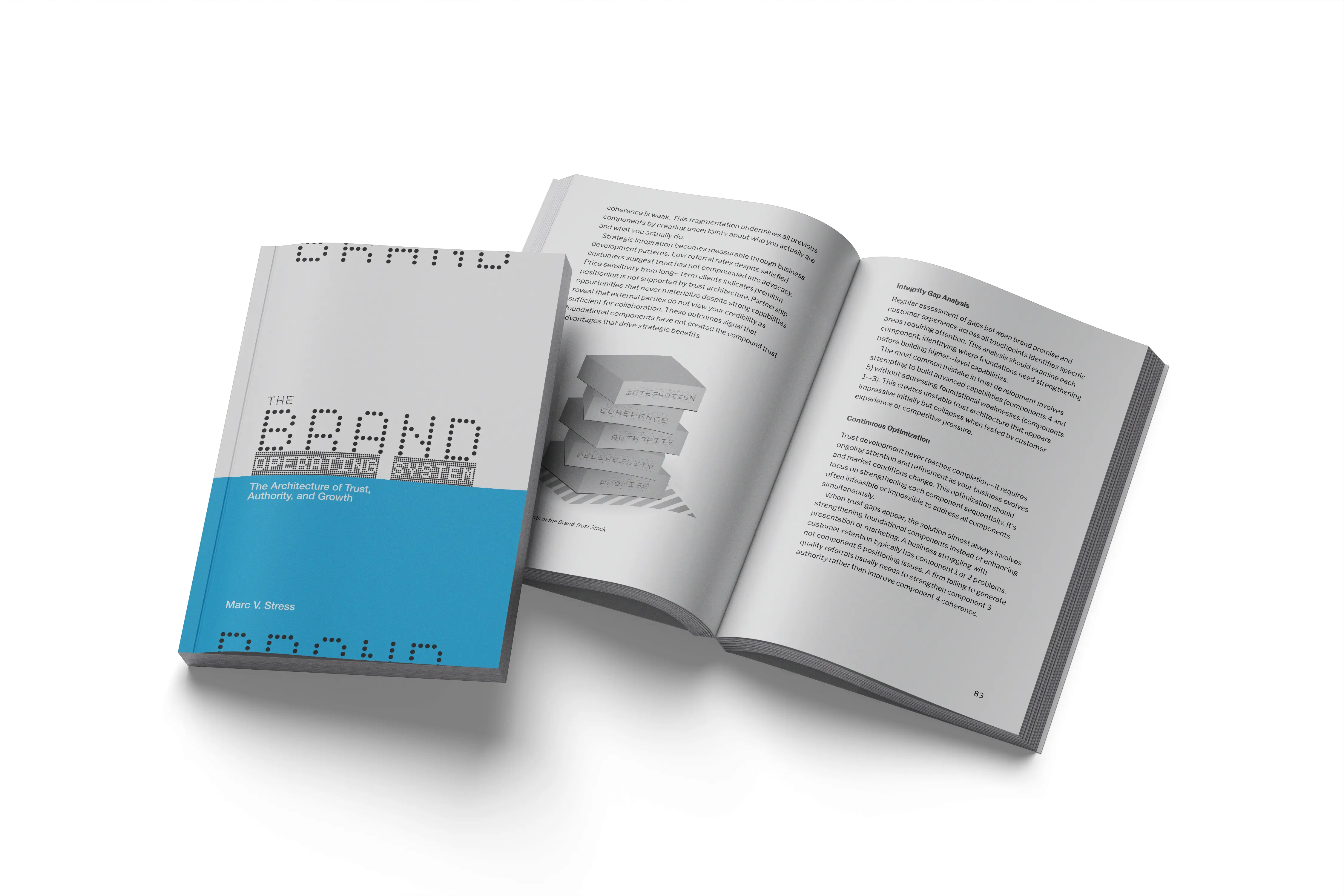
Graphic Design USA (GDUSA) published a feature on The Brand Operating System this week, describing the work as offering a systematic alternative to the tactical treadmill dominating modern marketing.
The piece centers on the book's central argument: brand isn't what happens after the real decisions are made — it's the infrastructure that makes every other business investment more efficient, more durable, and more likely to compound over time.
The Infrastructure Argument
GDUSA framed the book around its challenge to performance marketing orthodoxy. Where conventional approaches treat brand as a surface-level differentiator — something applied after strategy, operations, and product decisions are locked — The Brand Operating System positions it as foundational infrastructure.
From the book:
"Companies are caught in a familiar cycle: acquire customers, lose them, acquire more. The tactics get more expensive. The margins get thinner. And there's a nagging sense that you're building on rented land."
The framework addresses this by treating trust, authority, and market position as structural outcomes — built systematically, strengthened regardless of algorithm changes or platform shifts.
Industry Response
The GDUSA article highlighted advance praise from David C. Baker and Marty Neumeier — both recognized authorities in positioning and brand strategy.
Baker, whose work on positioning has shaped how professional services firms approach market strategy, called the book a framework that "connects positioning, trust, and growth in a way most branding books are too timid to attempt."
Neumeier, author of The Brand Gap and a foundational voice in design-driven brand strategy, described it as a "game-changer for every B2B and service firm."
Timing and Context
The feature arrives as design and marketing professionals increasingly question the sustainability of performance-driven acquisition models. Rising customer acquisition costs, declining platform reach, and the fragility of algorithm-dependent strategies have prompted renewed interest in durable frameworks.
The Brand Operating System offers a structural alternative rooted in systems thinking — treating brand as the operating layer that determines long-term value rather than a tactical response to market conditions.
About the Author
Marc V. Stress is Professor of Practice at Syracuse University's School of Design and operates as Fractional Chief Brand Officer through his consultancy OK Marc. His work focuses on the intersection of design systems, brand architecture, and strategic positioning for professional services firms and B2B organizations.
The Brand Operating System is slated for summer 2026 release and will be available through major trade distributors. Additional information, including advance chapters and supplemental materials, is available on this site.
Read the full GDUSA feature:
gdusa.com/new-book-offers-framework-for-building-brands-that-compound